
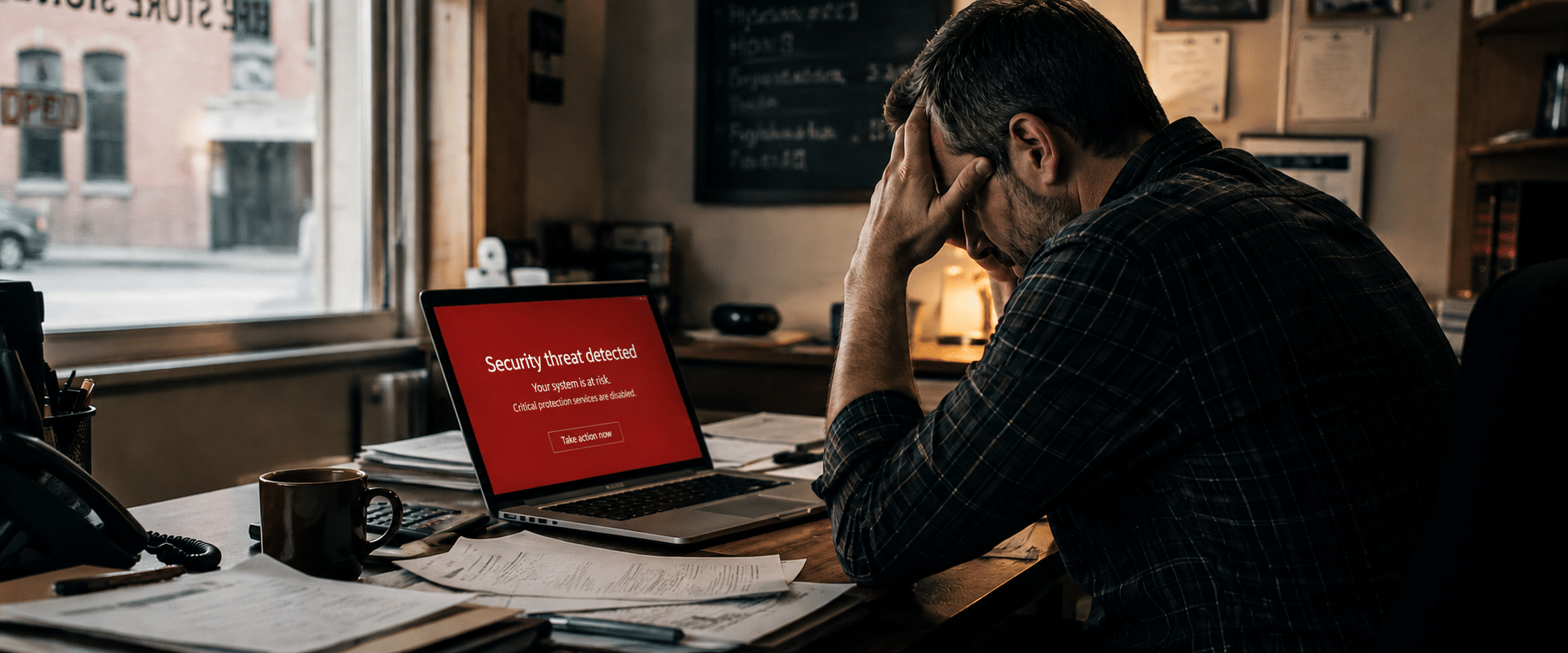
Why Cybersecurity Is No Longer Optional for Small Businesses
There’s a common assumption among small business owners that hackers aren’t interested in them. That the targets are big banks, multinationals, government systems – not a local accountancy firm in Gorey or a family-run retail shop in Courtown.
It’s an understandable assumption. It’s also wrong – and increasingly costly.
Small Businesses Are Being Targeted Deliberately
Cybercriminals don’t just go after the biggest fish. They go after the easiest ones. Larger organisations typically invest heavily in security infrastructure, dedicated IT teams, and threat monitoring. Small businesses often have none of that, which makes them attractive, low-resistance targets.
According to industry research, 88% of cyberattacks target small businesses, compared to just 39% at larger businesses. Phishing emails, ransomware, fake invoices, compromised passwords – these are everyday occurrences, not rare events. And the consequences for a small business can be severe: lost data, locked systems, financial fraud, and reputational damage that’s hard to recover from.
A business that loses access to its files for a week doesn’t just lose productivity. It can lose customers, miss payroll, and in some cases, never fully recover.
The Threats Worth Knowing About
You don’t need to become a cybersecurity expert to protect your business – but it helps to know what you’re up against.
Ransomware is one of the most common and damaging threats. Attackers gain access to your systems, encrypt your files, and demand payment to restore them. Even if you pay, there’s no guarantee you’ll get everything back.
Phishing is how most attacks start. A convincing email or text message tricks a staff member into clicking a link or handing over login credentials. It takes one click from one person to open the door.
Data breaches happen when customer or business information is accessed without authorisation. For any business handling personal data, which is most of them, this also brings GDPR implications and potential fines on top of the operational fallout.
Weak or reused passwords remain one of the most common ways attackers get in. If the same password is used across multiple accounts, a single breach elsewhere can compromise everything.
What Good Cybersecurity Actually Looks Like
The good news is that protecting your business doesn’t require a large IT department or an enormous budget. It requires a sensible, layered approach that covers the most likely threats.
The basics matter enormously. Strong, unique passwords with multi-factor authentication switched on. Regular software and security updates are applied promptly. Staff who know what a phishing email looks like and know how to report it.
Beyond the basics, businesses benefit from having proper endpoint protection on their devices, secure and regularly tested data backups, and visibility over what’s happening on their network. If something goes wrong, you want to catch it early – and you want to know your data is recoverable.
For businesses handling sensitive client information, a periodic IT audit is also worth considering. It gives you a clear picture of where your vulnerabilities are before someone else finds them.
Local Support Makes a Difference
One of the practical advantages of working with a local IT provider is response time. If something goes wrong, you want someone who can be on-site quickly – not logging a support ticket with a call centre that may be in a different time zone.
At Gorey IT Solutions, I work with businesses across Gorey and the surrounding area to put sensible, proportionate cybersecurity measures in place. Whether you’re starting from scratch or want to review what you currently have, I can help you understand your exposure and close the gaps.
Cybersecurity doesn’t have to be complicated. It just has to be in place.
Get in touch to arrange a no-obligation conversation about where your business stands.